
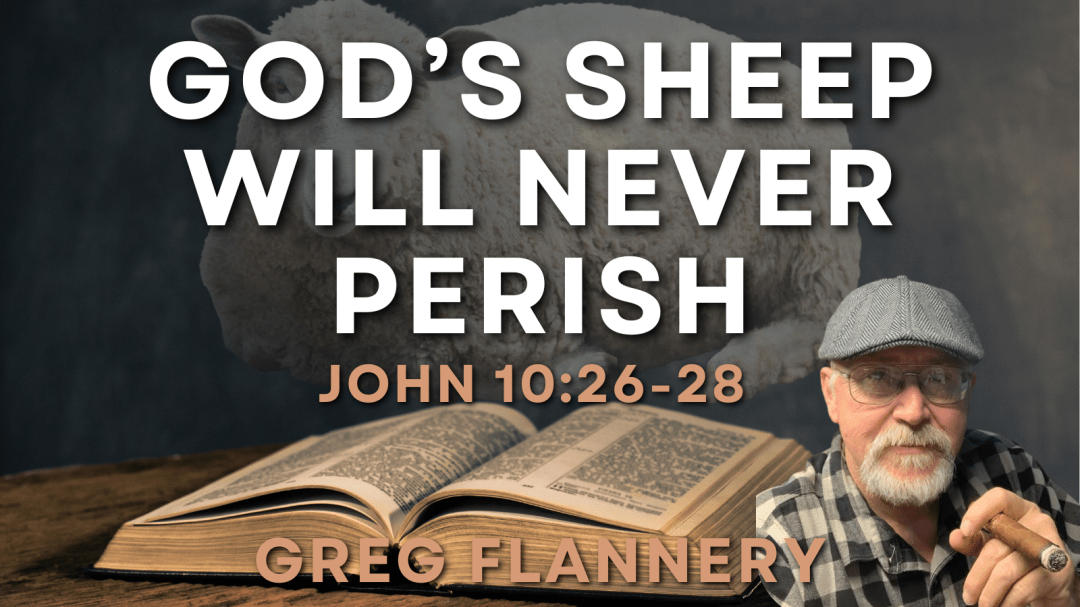
John 10:26–28
But ye believe not, because ye are not of my sheep, as I said unto you.
My sheep hear my voice, and I know them, and they follow me:
And I give unto them eternal life; and they shall never perish,
neither shall any man pluck them out of my hand.
The gospel goes forth, yet most reject it. Many hear the message of eternal life and turn away. Why is it that men do not value eternal life but would rather perish? The ultimate reason is found in the spiritual condition of humanity. All who are born into this world are born spiritually dead: “not of” His sheep. For many, this truth is offensive, but Jesus made it clear: those who did not believe in Him had not been effectually called by Him. They had not been given to Him by the Father and therefore did not belong to His flock. Their unbelief was no surprise to Him.
The sobering reality is this: no one can come to God unless God calls them. Jesus was emphasizing human inability to believe apart from divine grace. “Jesus therefore answered and said unto them, Murmur not among yourselves. No man can come to me, except the Father which hath sent me draw him: and I will raise him up at the last day” (John 6:43–44). And again, He said, “Therefore said I unto you, that no man can come unto me, except it were given unto him of my Father” (John 6:65).
Over and over, Jesus emphasized to unbelievers their inability to believe in Him apart from the Father’s gracious initiative. Why would He do that? To reveal the total dependence of man upon God’s grace. Salvation is not achieved through human will or effort but granted by divine mercy.
“My sheep hear My voice, and I know them, and they follow Me.” His sheep listen to His voice. He knows them intimately, and they follow Him—not to become His sheep, but because they already are His sheep. “And I give unto them eternal life, and they shall never perish.” Here, Jesus makes a profound claim to deity: only God can give eternal life. Notice that He does not say, “They have earned eternal life.” Eternal life is a gift, not a wage. We do not earn it. We do not deserve it. We are saved “not by works of righteousness which we have done, but according to His mercy” (Titus 3:5).
“They will never perish.” What a glorious promise! Those who trust in Christ—by the gift of faith—shall not perish. Jesus had already declared that His mission was to preserve all those whom the Father had given Him. None can snatch the sheep from the hand of Christ, for He and the Father are one. This is true security. Our salvation is eternally secure because God is for us. Nothing can separate us from His love.
Many churchgoers struggle with this truth. They believe their relationship with God depends on their own performance. They think that if they live “right,” God will accept them, and if they fail, He will reject them. This is a works-based system—a burden that leads only to guilt and condemnation. But when we understand that salvation is by grace through faith, and that our security rests upon Christ’s finished work, our hearts are set at peace. True assurance comes not from our own faithfulness, but from God’s faithfulness.
If you believe that a person whom the Lord has truly saved can lose their salvation, then, dear friend, you have not yet grasped the depth of salvation itself. Our salvation is not based on what we do but on what Christ has done. He has promised that His sheep will never perish. And that promise is as eternal and unbreakable as the hands that holds us.
Soli Deo Gloria

Greg Flannery is a Bible Teacher at Redeemer Church of Piketon, Ohio.
Discover more from Redeemer Church
Subscribe to get the latest posts sent to your email.

 Redeemer Church