
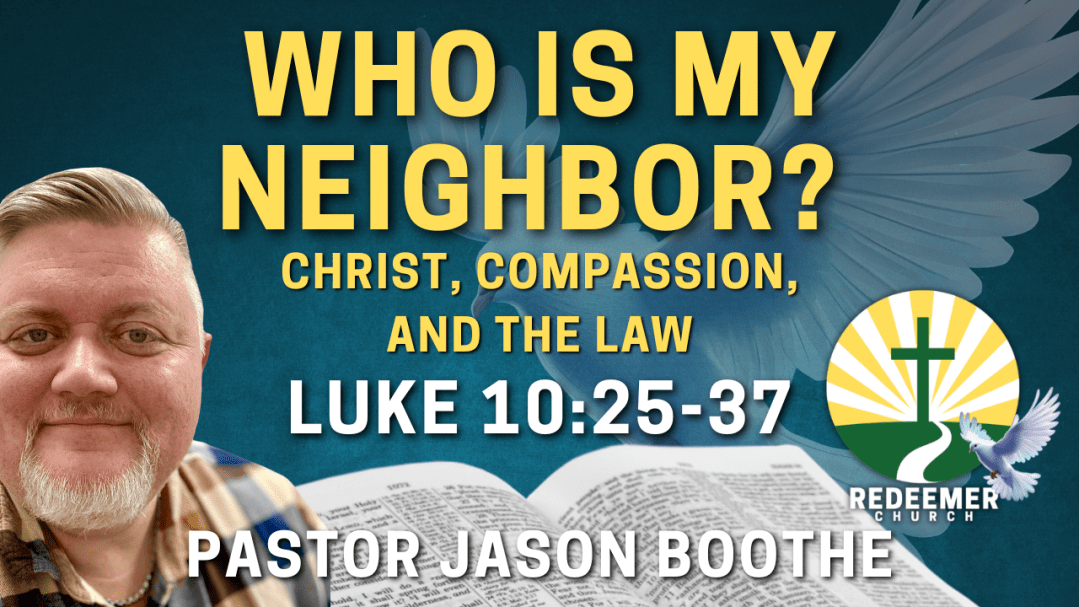
Luke 10:25–37
In Luke 10, Jesus is approached by a lawyer—an expert in God’s Law—who asks, “What shall I do to inherit eternal life?” (v. 25). But we’re told he asked to put Jesus to the test. This wasn’t an honest question—it was a trap, born of self-righteousness.
Jesus replies, “What is written in the Law?” The man recites the great commandments: Love God with all your heart, soul, strength, and mind, and love your neighbor as yourself (vv. 26–27). Jesus affirms, “Do this, and you will live.” But that’s the problem, isn’t it? Who among us has ever done this perfectly?
Rather than confess his inability, the lawyer tries to limit God’s command by asking, “And who is my neighbor?” (v. 29). In response, Jesus tells one of His most famous parables: the story of the Good Samaritan.
A man is beaten, robbed, and left for dead on the road from Jerusalem to Jericho (v. 30). A priest and a Levite—respected religious men—see the victim and pass by. But a Samaritan (a social and religious outcast) stops, has compassion, tends the man’s wounds, and provides for his recovery (vv. 31–35).
Jesus then asks, “Who proved to be a neighbor?” The lawyer responds, “The one who showed mercy.” Jesus answers, “You go, and do likewise.” (vv. 36–37).
But this parable is not primarily about being nice. It’s not about trying harder. It’s about the radical nature of God’s Law—and our failure to keep it. The Law doesn’t just call us to help our friends, but even our enemies, with sacrificial love. This story leaves no room for self-justification. Instead, it drives us to the only true neighbor—Jesus Christ Himself.
Jesus is the ultimate Good Samaritan. We are the broken man in the ditch, wounded by sin and left for dead by the world. The Law passed us by, unable to heal. Religion passed us by, unable to save. But Christ came to us, had compassion, and carried our burden. He binds our wounds, covers our debt, and promises to return (Isaiah 53:4–5; Titus 3:5–6).
Let us hear the parable rightly: not as a ladder to climb, but a window into the heart of God. Jesus doesn’t just tell us to love—He loved us first (1 John 4:10). And having received such mercy, we are now free to show mercy to others—not to earn life, but because we have life in Him.
🕊️ “Be kind to one another, tenderhearted, forgiving one another, as God in Christ forgave you.” – Ephesians 4:32
Jason Boothe serves as one of the Pastors of Redeemer Church of Piketon, Ohio.
Discover more from Redeemer Church
Subscribe to get the latest posts sent to your email.

 Redeemer Church